

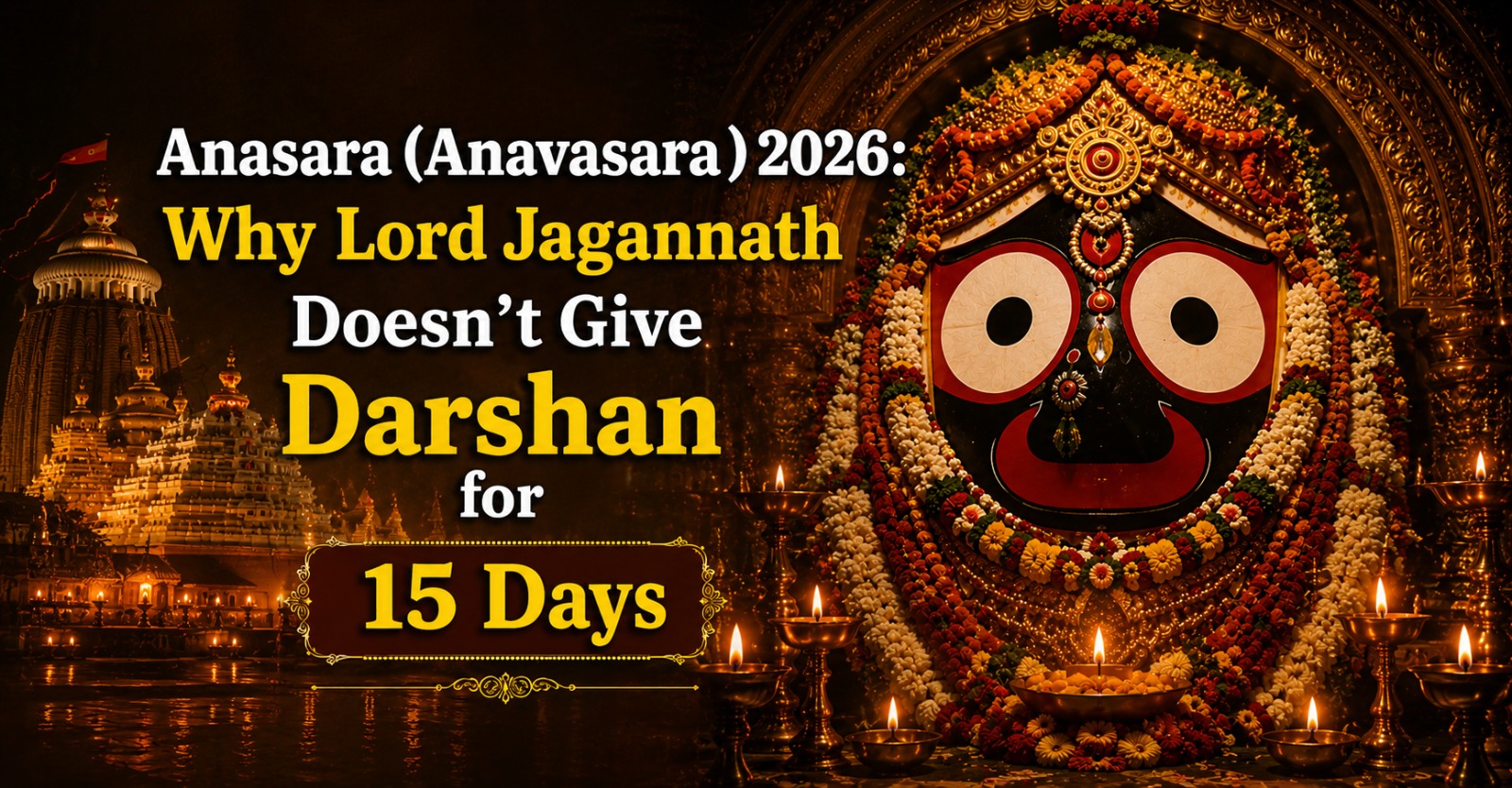
Anasara (Anavasara) 2026: Why Lord Jagannath Doesn’t Give Darshan for 15 Days
Jai Jagannath!
Every year, after the grand Snana Purnima festival, something extraordinary happens at the sacred Jagannath Temple, Puri. For nearly 15 days, millions of devotees are unable to have the darshan of Lord Jagannath.This unique period is known as Anasara (also spelled Anavasara), one of the most sacred and spiritually significant traditions in Jagannath culture.But why does Lord Jagannath stop giving darshan? Where do the deities remain during this period? And who is worshipped on the Ratna Singhasana (Ratna Vedi) while the deities are in seclusion?
Let’s explore the divine significance of the Anasara Ritual of Lord Jagannath — along with the complete Anasara 2026 dates.
Anasara 2026 Dates: Complete Schedule
In 2026, Snana Purnima falls on Monday, June 29, which means the Anasara period runs from June 29 to July 15, 2026. The Lord returns for Nava Jaubana Darshan on July 15, and the world-famous Rath Yatra begins on Thursday, July 16, 2026.
|
Event |
Date (2026) |
What Happens |
|
Snana Purnima (Deva Snana Yatra) |
Monday, June 29, 2026 |
Grand ceremonial bath with 108 pots of sacred water |
|
Anasara begins |
Monday, June 29, 2026 (evening) |
Deities move into the Anasara Ghara; public darshan closes |
|
Anasara period (Anasara Kala) |
June 29 – July 15, 2026 |
Rest, Ayurvedic treatment and secret rituals; Anasara Patti worshipped |
|
Alarnath darshan window |
June 30 – July 14, 2026 |
Devotees visit Lord Alarnath at Brahmagiri for darshan |
|
Nava Jaubana Darshan |
Wednesday, July 15, 2026 |
First darshan of the Lord in His renewed youthful form |
|
Jagannath Rath Yatra |
Thursday, July 16, 2026 |
The grand chariot festival begins |
|
Bahuda Yatra (return journey) |
Friday, July 24, 2026 |
The deities return to the Shree Mandira |
So if you are planning a Puri darshan between June 29 and July 15, 2026, remember that the main deities will not be available for public darshan. This is the ideal time to visit the Alarnath Temple at Brahmagiri instead — or plan your trip around the Nava Jaubana Darshan and Rath Yatra for the most auspicious experience.
What is the Anasara (Anavasara) Ritual?
The Anasara Ritual begins immediately after Snana Purnima, when Lord Jagannath, Lord Balabhadra, and Devi Subhadra are ceremonially bathed with 108 sacred pots of holy water. According to the ancient traditions of the Jagannath Temple, the grand ceremonial bath causes the deities to develop a divine fever. As a result, they are taken to the Anasara Ghara (Anavasara House) inside the temple for 14 to 15 days of rest and Ayurvedic treatment. During this sacred period, devotees cannot have direct darshan of the deities. This is why the period is known as Anasara Kala or Anavasara Kala.
Why Doesn’t Lord Jagannath Give Darshan During Anasara?
Unlike many Hindu temples where daily darshan continues throughout the year, the Jagannath Temple follows this centuries-old tradition with great devotion. It is believed that after Snana Purnima, Lord Jagannath, Lord Balabhadra, and Devi Subhadra require complete rest and recovery. During these 15 days:
- Public darshan remains closed.
- The deities rest inside the Anasara Ghara.
- Special rituals and healing ceremonies are performed.
- Devotees patiently await the auspicious Nava Jaubana Darshan before the Rath Yatra.
This tradition beautifully symbolizes that even the Divine accepts rest, healing, and loving care.
How Are the Deities Treated During Anasara?
During Anasara, Lord Jagannath is lovingly served as a patient. Several special offerings and Ayurvedic preparations are made, including:
- Anasara Pana
- Phuluri Oil (Phuluri Tela)
- Dashamula Modaka
- Herbal medicines
- Light medicinal offerings
These sacred treatments are traditionally supervised by the Raj Vaidya (Royal Ayurvedic Physician) of the temple. Every ritual reflects the intimate relationship between the Lord and His devotees.
Who Sits on the Ratna Vedi During Anasara?
One of the biggest questions devotees ask is: if Lord Jagannath is resting inside the Anasara Ghara, who is worshipped inside the sanctum? The answer lies in one of the most fascinating traditions of Jagannath culture. The original deities do not leave the temple premises. They remain inside the Anasara Ghara throughout the period of seclusion. Meanwhile, special Anasara Patti (sacred Pattachitra paintings) are ceremonially installed on the Ratna Vedi. These sacred representations are worshipped as:
- Sri Ananta Narayana as Lord Jagannath
- Sri Ananta Vasudeva as Lord Balabhadra
- Goddess Bhuvaneshwari as Devi Subhadra
All the daily rituals, offerings, and worship continue before these sacred forms until the original deities reappear for public darshan.
Do the Original Deities Leave the Temple?
A common misconception is that Lord Jagannath leaves the temple during Anasara. According to the traditional practices of the Jagannath Temple, this is not the case. The original deities remain inside the Anasara Ghara within the temple complex while receiving treatment and rest. The Anasara Patti serves as their symbolic presence for worship during this sacred period.
Why is Alarnath Temple Important During Anasara?
Another beautiful tradition is associated with Lord Alarnath, located at Brahmagiri, about 25 km from Puri. It is believed that when Lord Jagannath does not grant public darshan during Anasara, devotees may receive the same spiritual blessings by visiting Lord Alarnath. For this reason, thousands of pilgrims visit the Alarnath Temple every year during the Anasara period — in 2026, that means between June 30 and July 14.
The temple becomes one of the most important pilgrimage destinations until Lord Jagannath returns for public darshan.
What is Nava Jaubana Darshan?
At the end of the Anasara period, just one day before the famous Jagannath Rath Yatra, the deities once again appear before devotees. This sacred occasion is called Nava Jaubana Darshan, meaning “the darshan of the Lord in His renewed youthful form.” In 2026, Nava Jaubana Darshan falls on Wednesday, July 15, one day before the Rath Yatra on July 16. It is one of the most awaited darshans of the year, drawing countless devotees from across India and around the world.
Spiritual Significance of the Anasara Ritual
The Anasara Ritual is much more than a period when darshan is unavailable. It teaches profound spiritual values:
- The Lord accepts loving service from His devotees.
- Healing and rest are also sacred.
- Separation deepens devotion.
- Waiting patiently for the Lord strengthens faith.
- Every reunion with the Divine becomes even more meaningful.
This beautiful tradition makes Jagannath culture unique among Hindu traditions.
Book Jagannath Darshan Online with PrayFullit
Planning a visit to the sacred Jagannath Temple, Puri for Nava Jaubana Darshan or Rath Yatra 2026? PrayFullit offers a convenient way to plan your spiritual journey with Jagannath Darshan Booking services.
Through PrayFullit, you can:
- Book Jagannath Darshan online
- Get assistance with darshan planning
- Receive guidance for temple visits
- Enjoy a smoother pilgrimage experience
Book your Jagannath Darshan today and experience the divine blessings of Mahaprabhu Jagannath without unnecessary hassle.
➤ Click here to book your Jagannath Darshan online.
Frequently Asked Questions (FAQs)
What are the Anasara dates in 2026?
In 2026, Anasara begins after Snana Purnima on Monday, June 29 and continues until Nava Jaubana Darshan on Wednesday, July 15. Rath Yatra follows on Thursday, July 16, 2026.
What is Anasara in Jagannath Temple?
Anasara is the sacred 14–15 day period after Snana Purnima when Lord Jagannath, Lord Balabhadra, and Devi Subhadra remain in seclusion for rest and Ayurvedic treatment.
Why doesn’t Lord Jagannath give darshan for 15 days?
According to temple tradition, the deities develop a divine fever after the ceremonial bath on Snana Purnima and therefore remain in the Anasara Ghara until they recover.
Who is worshipped during Anasara?
Special Anasara Patti representations of Sri Ananta Narayana, Sri Ananta Vasudeva, and Goddess Bhuvaneshwari are worshipped while the original deities remain in seclusion.
Do the original deities leave the temple during Anasara?
No. According to temple tradition, the original deities remain inside the Anasara Ghara within the Jagannath Temple complex.
What is Nava Jaubana Darshan?
Nava Jaubana Darshan is the first public darshan of Lord Jagannath, Lord Balabhadra, and Devi Subhadra after the Anasara period, held one day before the Rath Yatra — on July 15 in 2026.
Why do devotees visit Alarnath Temple during Anasara?
It is traditionally believed that visiting Lord Alarnath during Anasara grants spiritual merit comparable to having the darshan of Lord Jagannath while the main deities remain in seclusion.
Conclusion
The Anasara (Anavasara) Ritual is one of the most profound and spiritually meaningful traditions of Jagannath Temple, Puri. It reminds devotees that love is expressed not only through celebration but also through care, patience, service, and longing for the Divine. As devotees eagerly await Nava Jaubana Darshan on July 15, 2026, the Anasara period becomes a time of deeper faith and devotion, making the reunion with Lord Jagannath even more sacred. If you are planning your pilgrimage to Puri for Rath Yatra 2026, PrayFullit’s Jagannath Darshan Booking Service can help you experience a seamless and spiritually fulfilling visit to the holy abode of Mahaprabhu Jagannath.
Jai Jagannath!