

Govardhan Puja 2026: Date, Muhurat, Annakut Vidhi & Significance
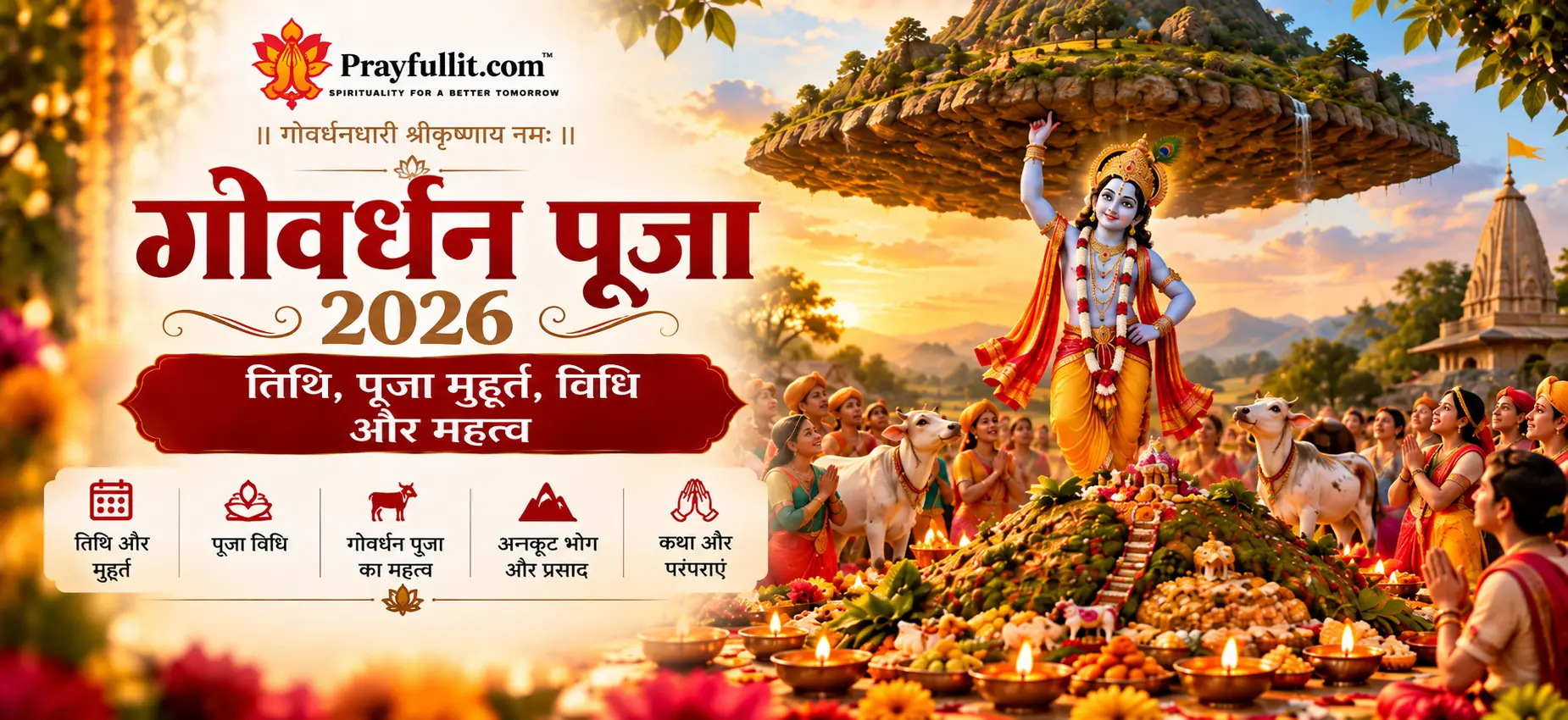
Govardhan Puja 2026 falls on Monday, 9 November, the fourth day of the five-day Diwali festival. It commemorates the day young Lord Krishna lifted Govardhan Hill to protect the people of Vrindavan, and is celebrated with Annakut — a mountain of food offered to Krishna. Want a pandit to guide your Govardhan Puja or Annakut arrangement at home? Book a Pandit on Prayfullit now.
Govardhan Puja 2026: Quick Facts
| Detail | Information |
|---|---|
| Festival | Govardhan Puja / Annakut |
| Date | Monday, 9 November 2026 |
| Tithi | Kartik Shukla Pratipada |
| Pratahkal Muhurat (Delhi) | approx. 6:21 AM – 8:27 AM |
| Sayankal Muhurat (Delhi) | approx. 2:45 PM – 4:52 PM |
| Pratipada Tithi Begins | approx. 11:01 PM, 8 November |
| Pratipada Tithi Ends | approx. 12:30 AM+, 10 November |
| Day of Diwali festival | Day 4 of 5 (Dhanteras to Bhai Dooj) |
Muhurat timings above are for Delhi and shift with sunrise across cities — confirm your city's exact window.
What Is Govardhan Puja?
Govardhan Puja falls on Kartik Shukla Pratipada, the day after Diwali, and marks the moment Lord Krishna lifted Govardhan Hill on his little finger to shelter the people and cattle of Vrindavan from torrential rain sent by an angered Indra.
The people of Vraja had, at Krishna's urging, stopped their annual Indra Yagna and turned instead to worshipping Govardhan Hill — the actual source of the grass, water and shelter that sustained their cattle and their lives. When Indra unleashed rain to punish them for abandoning his worship, Krishna held the hill aloft for seven days and nights, and the villagers sheltered beneath it. Humbled, Indra eventually acknowledged Krishna's supremacy and sought forgiveness.
Why Govardhan Puja Matters
The festival carries a message that's a little different from the rest of the Diwali cluster: it's about gratitude to nature and self-reliance rather than appeasing a distant power. Krishna's argument to the villagers was straightforward — the hill, the cows, and the land that directly fed and sheltered them deserved worship more than a deity who only intervened when flattered. That idea of honouring what actually sustains you is why Govardhan Puja is as much about cows and the earth as it is about Krishna himself.
Govardhan Puja Vidhi
- Make a Govardhan replica out of cow dung or clay in the courtyard or puja area, shaped roughly like a small hill.
- Decorate the replica with flowers, grass and small figures representing cows, Krishna and the villagers of Vraja.
- Prepare Annakut — a large spread of rice, dal, vegetables, sweets and savouries, ideally in the traditional count of 56 or 108 dishes, arranged like a small mountain.
- Offer the Annakut to Krishna, along with tulsi leaves and flowers, during the Pratahkal or Sayankal muhurat.
- Worship and decorate cows with garlands, colours and tilak — Gau Puja is considered central to the day.
- Circumambulate the Govardhan replica, some families doing so seven times in memory of the seven days Krishna held the hill aloft.
- Distribute the Annakut prasad to family, neighbours and anyone in need — the sharing is considered as important as the offering itself.
What Goes Into an Annakut Thali
- Rice preparations (plain, sweet, tamarind)
- Dal and vegetable curries in variety
- Puri, kachori and other fried items
- Sweets — laddoo, halwa, kheer
- Pickles and chutneys
- Fresh fruit and dry fruits
The exact count and dishes vary widely by region and family tradition — some households keep it simple with a handful of dishes rather than the traditional 56.
Regional Names and Variations
- Braj region (Mathura-Vrindavan): The most elaborate celebrations, with massive Annakut displays at Krishna temples
- Gujarat: Widely celebrated as Bestu Varas, the Gujarati New Year, alongside Govardhan Puja
- Maharashtra: Observed as Padwa or Bali Pratipada, also marking a new beginning
- North India generally: A quieter, home-based version of Annakut and Gau Puja, without the temple-scale displays seen in Braj
Book a Pandit for Govardhan Puja 2026 with Prayfullit
Whether you want help setting up the Govardhan replica, arranging an Annakut spread, or performing Gau Puja correctly, Prayfullit connects you with experienced, verified pandits.
- Book Govardhan Puja and Annakut guidance
- Get the correct muhurat for your city
- Arrange Gau Puja and Krishna aarti support
Book Your Pandit for Govardhan Puja or Talk to Our Team to plan your celebration.
Conclusion
Govardhan Puja on 9 November 2026 closes out the devotional heart of Diwali with a lesson in gratitude — to the land, the cows, and everything that quietly sustains a household. Book Your Pandit on Prayfullit to get your Annakut and Gau Puja done right.