

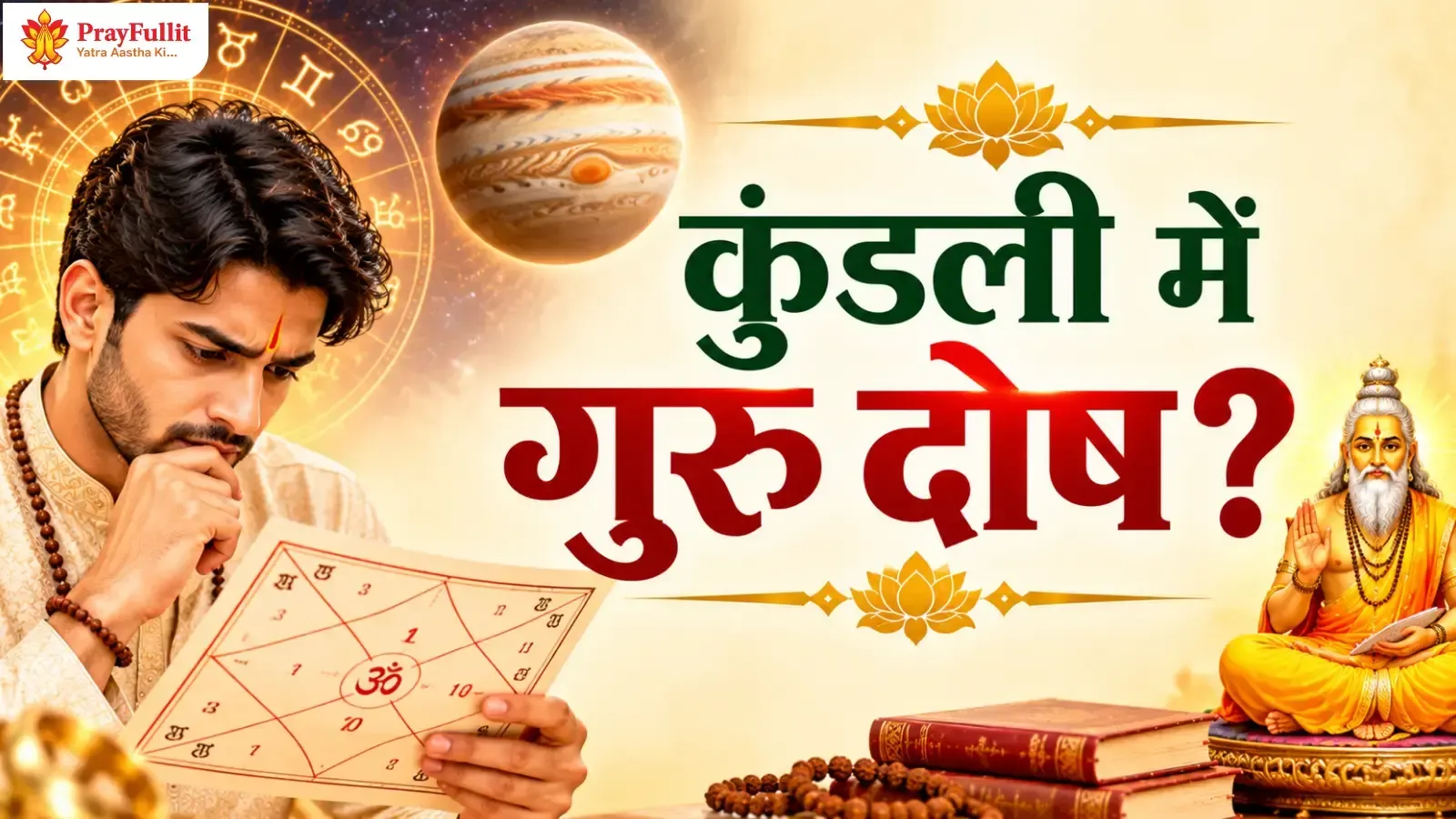
Guru Dosh in Kundli is a term used in certain Vedic astrology traditions when Jupiter, also known as Guru or Brihaspati, is considered adversely influenced in a birth chart. Jupiter is traditionally associated with wisdom, knowledge, prosperity, spirituality, guidance and ethical values. Its placement is interpreted alongside other planetary positions and horoscope factors.
When Jupiter is considered afflicted, some astrologers interpret its placement as potentially challenging for aspects of life associated with the planet. However, Guru Dosh does not have one universally accepted definition, and its interpretation depends on the astrological tradition and the complete Kundli.
In this article, we will explain what Guru Dosh means, how it is interpreted in Vedic astrology, its traditional effects and the spiritual remedies commonly associated with Jupiter.
What Is Guru Dosh?
Guru Dosh refers to an astrological interpretation in which Jupiter (Guru or Brihaspati) is considered adversely influenced or afflicted in a birth chart.
In Vedic astrology, Jupiter is regarded as an important planet associated with wisdom, higher education, spiritual knowledge, prosperity, good fortune, teachers, guidance, morality and expansion. Its placement in a horoscope is traditionally examined to interpret how these themes may manifest in a person's life.
When Jupiter is influenced by certain planetary combinations, placements or other astrological factors considered unfavourable, some astrologers may interpret it as a Jupiter-related affliction or Guru Dosh.
However, Guru Dosh is not a single universally standardised planetary combination. Different astrological traditions may use the term differently, and a planet considered weak or afflicted does not automatically indicate a specific Dosh.
The interpretation generally depends on Jupiter's house, zodiac sign, conjunctions, aspects, house ownership, strength and the overall horoscope.
How Is Guru Dosh Interpreted in Vedic Astrology?
Astrologers generally examine several factors when interpreting Jupiter's condition in a birth chart. These factors are considered together rather than independently.
1. Jupiter's House Placement
Jupiter's placement in different houses of a birth chart is traditionally interpreted in relation to the areas of life represented by those houses.
For example, astrologers may examine Jupiter's placement in relation to education, career, finances, relationships, spirituality or personal development, depending on the house involved.
The interpretation also depends on the ascendant and the houses Jupiter rules in the particular horoscope. Therefore, the same house placement may not produce the same interpretation for everyone.
2. Jupiter's Zodiac Sign and Strength
In Vedic astrology, Jupiter's zodiac sign is considered an important factor in assessing its strength and condition.
Astrologers may examine whether Jupiter is placed in a sign traditionally considered favourable or unfavourable, along with other factors such as planetary dignity and its relationship with the ascendant.
However, Jupiter's sign alone is not sufficient to determine whether Guru Dosh is present.
3. Planetary Conjunctions
When Jupiter is positioned alongside another planet in a birth chart, astrologers examine the conjunction and its traditional interpretation. Different planetary conjunctions may be interpreted differently depending on the planets involved, their strength and the horoscope as a whole.
For example, the conjunction of Jupiter and Rahu is commonly associated with Guru Chandal Dosh in certain Vedic astrology traditions. This is a specific combination and should not be treated as synonymous with every interpretation of Guru Dosh.
4. Planetary Aspects
Astrologers also examine the aspects Jupiter receives from other planets. Certain planetary influences may traditionally be considered favourable or challenging, depending on the astrological system and chart context.
These aspects are evaluated alongside Jupiter's sign, house, strength and other planetary relationships.
5. Overall Horoscope
Guru Dosh should not be interpreted through a single planetary placement alone.
Astrologers generally examine the ascendant, planetary house ownership, aspects, conjunctions, planetary strength and other combinations in the birth chart before interpreting Jupiter's condition.
This broader assessment is important because the same planetary placement may be interpreted differently in different horoscopes.
Is Guru Chandal Dosh the Same as Guru Dosh?
Guru Dosh and Guru Chandal Dosh are not necessarily the same astrological concept.
Guru Chandal Dosh is a specific planetary combination commonly associated with Jupiter (Guru) and Rahu placed together in a birth chart in certain Vedic astrology traditions. Some interpretations may consider additional factors when assessing this combination.
Guru Dosh, on the other hand, is a broader term used in certain astrological interpretations to describe Jupiter-related afflictions.
Therefore, Guru Chandal Dosh should be understood as a specific combination rather than another name for every type of Guru Dosh.
If you are specifically looking for the traditional ritual associated with Guru Chandal Dosh, you can explore Guru Chandal Dosh Nivaran Pooja.
Guru Dosh Ke Lakshan: Traditional Effects of Guru Dosh
In Vedic astrology, Jupiter is traditionally associated with wisdom, learning, prosperity, guidance, ethics, spirituality and growth. When Jupiter is interpreted as afflicted, some astrologers associate its placement with challenges involving these themes.
These interpretations are not scientifically established effects, and Guru Dosh should not be treated as a guaranteed explanation for difficulties in a person's life.
1. Challenges Related to Education, Knowledge and Judgement
Jupiter is traditionally associated with higher education, knowledge, wisdom, judgement and guidance.
Some astrologers interpret certain Jupiter afflictions as potentially indicating difficulties related to learning, making informed decisions, finding guidance or applying knowledge effectively.
These interpretations may also be considered alongside other planetary placements associated with education and intellectual development.
2. Career, Opportunities and Financial Decisions
In traditional Vedic astrology, Jupiter is associated with growth, prosperity, guidance, judgement and opportunities.
Certain Jupiter placements may be interpreted as indicating challenges related to decision-making, professional guidance, financial judgement or recognising opportunities.
However, a planetary placement cannot reliably predict career outcomes, financial losses or professional success. These matters are influenced by many practical and real-world factors.
3. Marriage and Relationship-Related Interpretations
Jupiter is considered an important planet in certain traditional marriage-related astrological interpretations.
Some astrologers may examine Jupiter's placement when interpreting marriage, relationship values, compatibility, guidance or family-related matters, depending on the horoscope and the astrological tradition.
However, Guru Dosh alone should not be considered a definitive indicator of marriage delays, relationship problems or marital outcomes.
4. Spirituality, Beliefs and Personal Growth
Jupiter is traditionally associated with spiritual knowledge, religious beliefs, wisdom, morality, teachers and philosophical understanding.
Some astrologers interpret certain Jupiter afflictions as potentially indicating periods of confusion regarding beliefs, challenges in finding guidance or difficulties maintaining spiritual discipline.
These interpretations are part of traditional astrology and should not be treated as fixed descriptions of a person's character or spiritual life.
How to Check Guru Dosh in Your Kundli?
Guru Dosh is traditionally assessed by examining Jupiter's position and its relationship with other planets in a birth chart.
To interpret Jupiter's condition, astrologers generally consider the following factors:
-
Birth details: A horoscope is generally prepared using the person's date of birth, exact birth time and birthplace.
-
Jupiter's house placement: The house occupied by Jupiter and the houses it rules in the horoscope.
-
Zodiac sign: Jupiter's placement in a zodiac sign and its traditional dignity.
-
Conjunctions: Other planets positioned alongside Jupiter.
-
Planetary aspects: Influences Jupiter receives from other planets.
-
Overall horoscope: The ascendant, house ownership, planetary strength and other astrological combinations.
A single planetary placement or a list of online symptoms is not sufficient to determine whether Guru Dosh is present.
Guru Dosh Ke Upay: Traditional Remedies for Guru Dosh
In Vedic astrology, several spiritual practices are traditionally associated with Jupiter, or Brihaspati. These remedies are generally performed with the intention of seeking blessings, cultivating wisdom, maintaining spiritual discipline and following devotional practices.
The remedies may vary according to the astrological tradition, religious beliefs and the interpretation of the horoscope.
1. Worship Lord Vishnu and Brihaspati
Lord Vishnu and Brihaspati are associated with different aspects of traditional Hindu religious and astrological practices. Devotees may offer prayers to Lord Vishnu or Brihaspati as part of Jupiter-related spiritual remedies.
Traditional devotional practices may include:
-
Offering prayers to Lord Vishnu.
-
Reciting Vishnu-related devotional texts.
-
Worshipping Brihaspati according to one's religious tradition.
-
Maintaining a regular prayer routine.
-
Practising devotion, gratitude and spiritual discipline.
These practices are traditionally followed to seek divine blessings, wisdom, peace and spiritual growth.
2. Observe Thursday Practices
Thursday, traditionally associated with Guru or Brihaspati, is considered an auspicious day for Jupiter-related worship in Vedic astrology.
Some devotees follow Thursday observances as part of their spiritual routine. These may include:
-
Offering prayers to Brihaspati or Lord Vishnu.
-
Reciting Guru-related mantras.
-
Reading spiritual or religious texts.
-
Practising charity.
-
Following devotional discipline.
The specific practices may vary according to individual beliefs and traditions. Thursday observances are generally followed as religious practices rather than guaranteed methods of changing life outcomes.
3. Donate Yellow-Coloured Items
Yellow is traditionally associated with Jupiter in Vedic astrology. Donations and charity are sometimes recommended as Jupiter-related remedies.
Items that may traditionally be donated include:
-
Chana dal or other yellow-coloured pulses.
-
Turmeric.
-
Yellow-coloured food items.
-
Educational supplies.
-
Other items according to one's ability and circumstances.
Charity is traditionally associated with generosity, compassion and service. Donations should be voluntary and made according to one's means rather than as a financial obligation.
4. Chant Guru or Brihaspati Mantras
Mantra chanting is traditionally practised as part of Jupiter-related spiritual remedies. Devotees may chant Guru or Brihaspati mantras to seek blessings and cultivate devotion.
One commonly recited mantra associated with Brihaspati is:
Om Brim Brihaspataye Namah
The mantra is traditionally associated with Brihaspati, the planetary deity of Jupiter.
Devotees may include mantra chanting in their daily prayer routine or Thursday worship according to the practices they follow.
Mantra wording, pronunciation and recommended chanting practices may vary across traditions.
5. Perform Guru Grah Shanti Pooja
Guru Grah Shanti Pooja is a traditional Hindu ritual performed to seek the blessings of Brihaspati or Jupiter.
In Vedic astrology, the ritual is associated with spiritual remedies for Jupiter-related concerns. It may involve mantras, offerings, prayers and other ritual practices performed according to the tradition followed by the pandit.
People may seek Guru Grah Shanti Pooja as a devotional practice associated with wisdom, prosperity, spiritual guidance, peace and blessings.
If you wish to perform this traditional ritual, you can explore Guru Grah Shanti Pooja and arrange a pandit for the ceremony.
Can Guru Dosh Be Removed?
In traditional Vedic astrology, Guru Dosh remedies are generally described as spiritual practices intended to seek blessings and peace associated with Jupiter.
These may include prayers, mantra chanting, charity, devotional practices and rituals such as Guru Grah Shanti Pooja.
However, there is no scientifically established method for removing a planetary dosh or guaranteeing that a specific ritual will change a person's life outcomes.
Such remedies should be understood within the context of spiritual and astrological beliefs rather than guaranteed solutions to problems related to career, marriage, finances, health or education.
When Should You Consult an Astrologer?
Guru Dosh is interpreted differently depending on the complete birth chart. Jupiter's placement, house ownership, conjunctions, aspects and other planetary factors may influence how an astrologer interprets a horoscope. If you want to understand how Guru is positioned in your Kundli and which traditional remedies may be relevant to your chart, a personalised horoscope reading may help you understand the astrological interpretation.
Rather than relying only on generic online descriptions, you can seek an interpretation of your complete birth chart.
Talk to an Astrologer to discuss your horoscope and understand the traditional interpretation of your planetary placements.
Learn About This Pooja
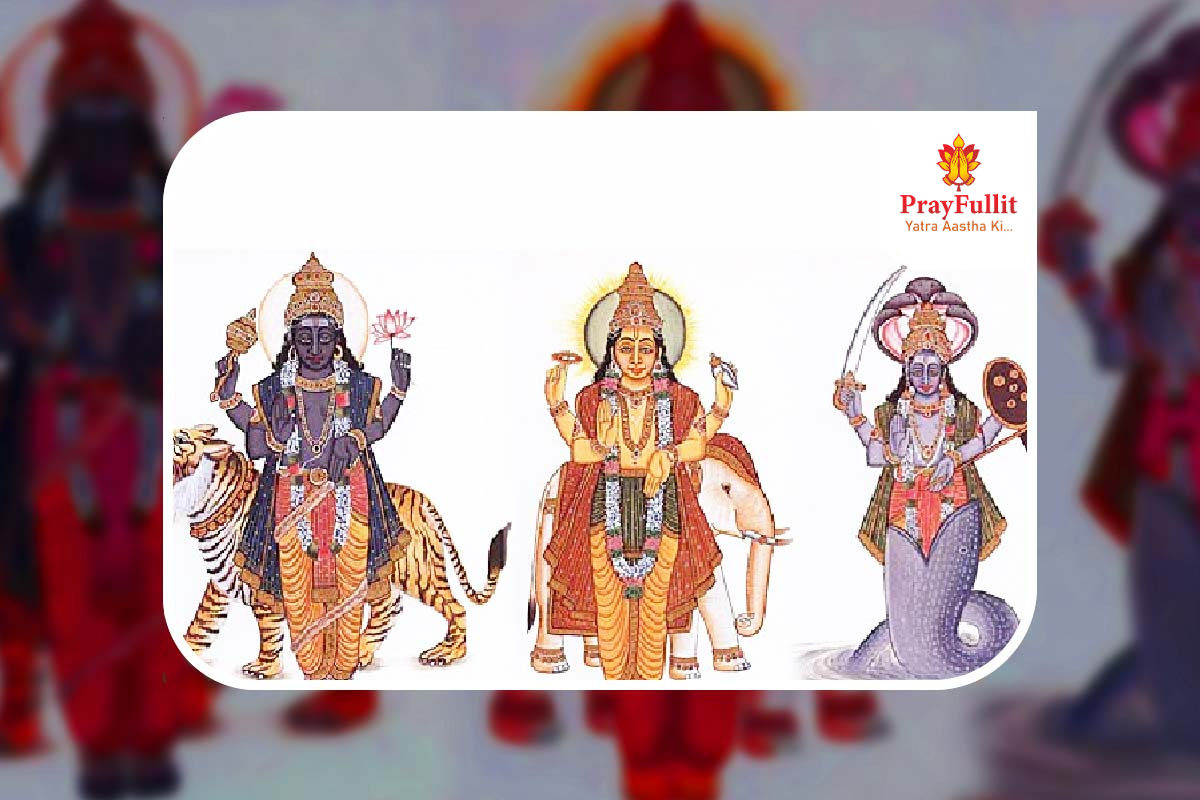
Guru Chandal Dosh Nivaran Pooja
Guru Chandal Dosh Nivaran Puja Online – Book Expert Pandits for Wisdom & WealthIn Vedic astrology, Guru Chandal Dosh is...
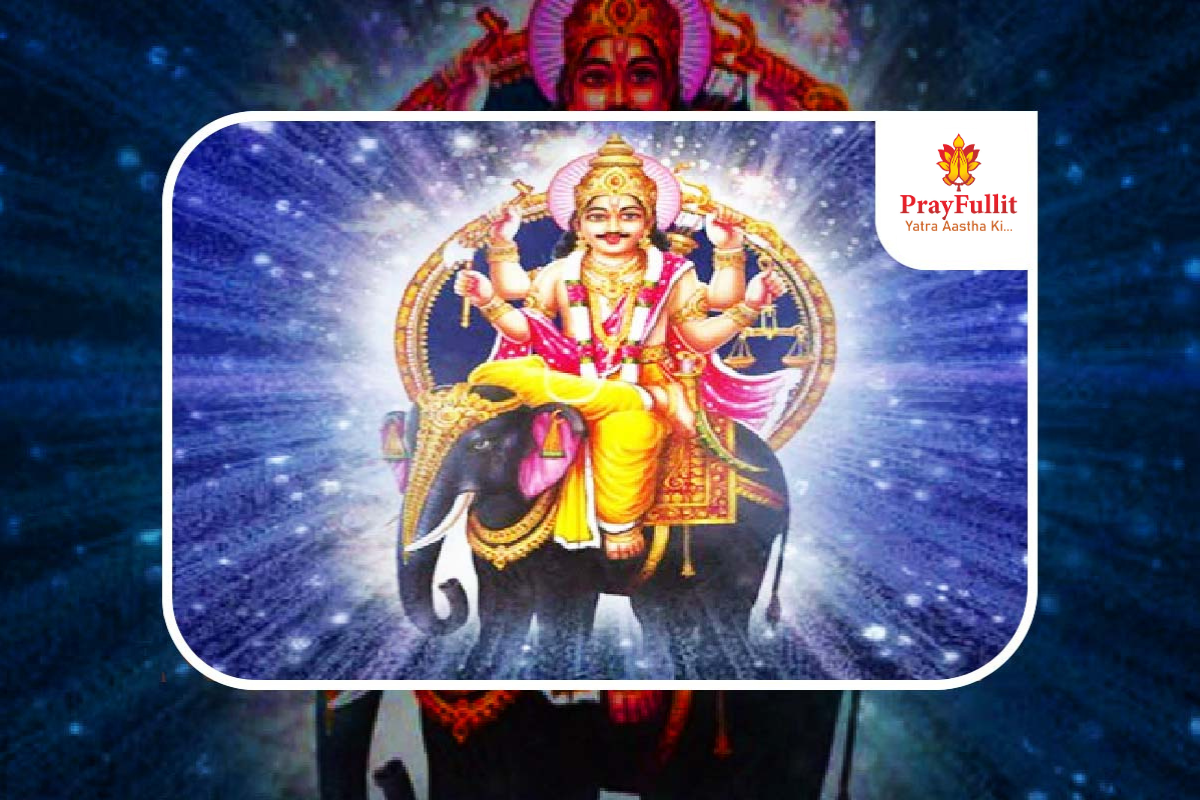
Guru Grah Shanti Pooja
Guru Grah Shanti Puja Online – Book Expert Pandits for Wealth & WisdomIn Vedic astrology, Guru (Jupiter) is known as the...
This information is based on traditional religious beliefs and scriptural practice. No remedy can guarantee a result. For health, legal or financial matters, always consult a qualified expert.
Want Guru Chandal Dosh Nivaran Pooja performed with full rituals by an experienced pandit?