

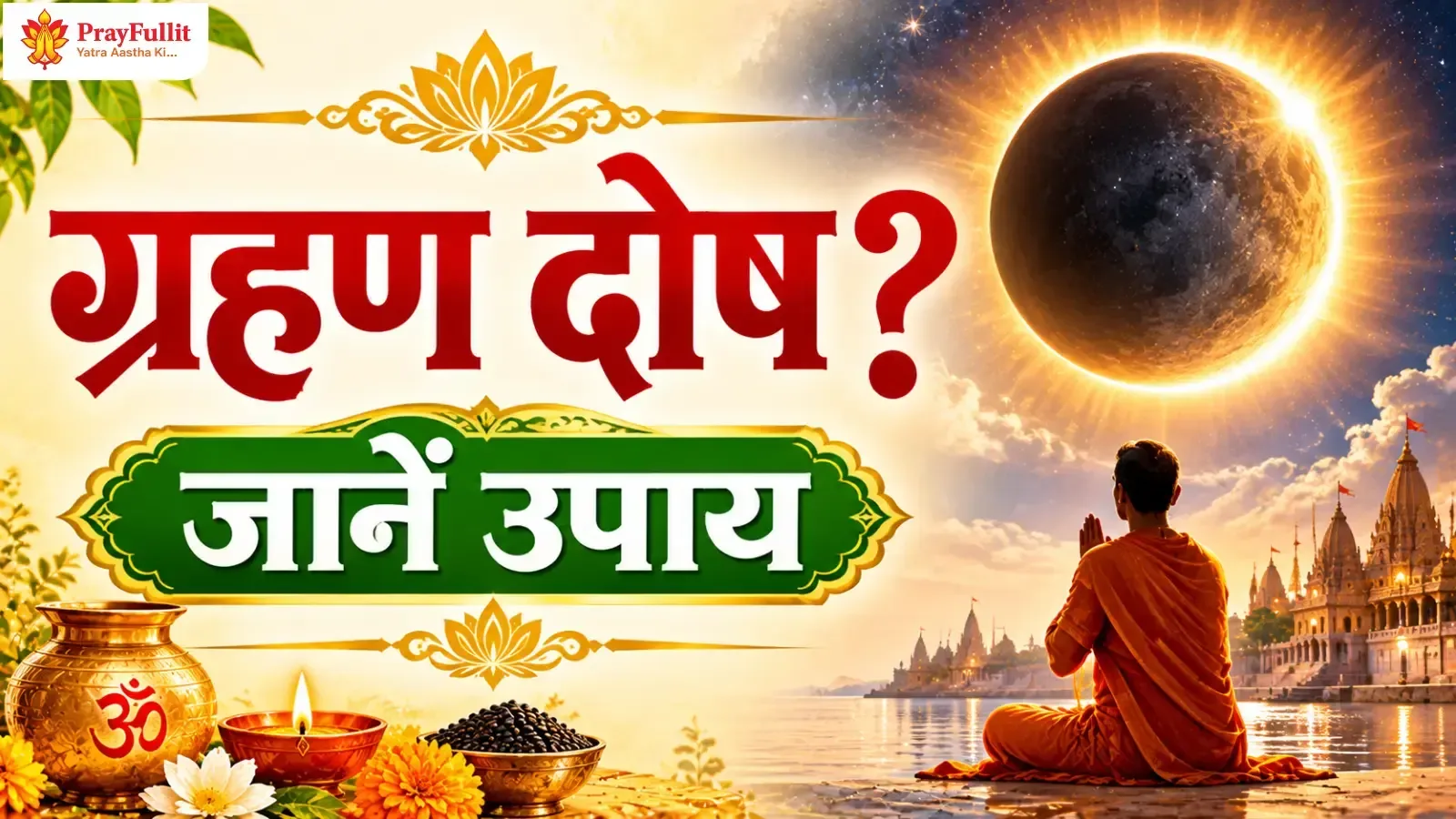
Grahan Dosh in Kundli is a planetary combination discussed in Vedic astrology, commonly associated with the conjunction of the Sun or Moon with Rahu or Ketu in a birth chart. Traditionally, this combination is interpreted in relation to different aspects of life depending on the planetary positions, their strength and the overall Kundli.
The Sun represents authority, confidence, vitality and one's sense of purpose, while the Moon is associated with the mind, emotions and inner peace. When either of these planets is associated with Rahu or Ketu, astrologers may interpret the combination as Grahan Dosh, also known as an eclipse-related dosh.
Grahan Dosh is generally discussed in two forms: Surya Grahan Dosh and Chandra Grahan Dosh. Its interpretation and traditionally recommended remedies may differ depending on the planetary combination and other factors in the birth chart.
In this guide, we will explore what Grahan Dosh is, how it is formed in Kundli, its traditional signs and effects, and spiritual remedies commonly followed to seek peace, balance and divine blessings.
What Is Grahan Dosh in Kundli?
Grahan Dosh is a planetary combination described in Vedic astrology when the Sun or Moon is associated with Rahu or Ketu in certain configurations in a birth chart. The term Grahan refers to an eclipse, and the astrological interpretation is traditionally connected with the influence of Rahu or Ketu on the Sun or Moon.
In Vedic astrology, the Sun is associated with confidence, leadership, authority, vitality and identity. The Moon represents emotions, mental experiences, intuition and inner peace. Their association with Rahu or Ketu is interpreted according to the planetary positions, the house and sign involved, and the overall Kundli.
Grahan Dosh is commonly discussed in two forms:
- Surya Grahan Dosh: Traditionally associated with the Sun and Rahu or Ketu.
- Chandra Grahan Dosh: Traditionally associated with the Moon and Rahu or Ketu.
Not every association is interpreted identically in all astrological traditions. The degree of association, planetary strength, house placement, aspects and the overall birth chart may influence how an astrologer interprets a Grahan-related combination.
How Is Grahan Dosh Formed in Kundli?
According to Vedic astrology, Grahan Dosh is commonly associated with the conjunction of the Sun or Moon with Rahu or Ketu in a birth chart. Rahu and Ketu are known as shadow planets and are associated with eclipse phenomena in traditional astrology.
The interpretation of Grahan Dosh may depend on several factors:
- Planetary association: The association between the Sun or Moon and Rahu or Ketu.
- Degree of conjunction: The closeness of the planets may be considered relevant in some astrological traditions.
- House placement: The house in which the combination occurs may influence its interpretation.
- Zodiac sign: The sign occupied by the planets is considered during analysis.
- Planetary aspects: Other planetary influences may affect how the combination is interpreted.
- Overall Kundli: Astrologers examine the entire birth chart rather than relying on a single planetary placement.
For this reason, Grahan Dosh is generally assessed by examining the complete Kundli and the planetary combinations present in it.
Types of Grahan Dosh in Astrology
Grahan Dosh is primarily discussed in relation to the Sun and Moon. These combinations are commonly referred to as Surya Grahan Dosh and Chandra Grahan Dosh.
Chandra Grahan Dosh
Chandra Grahan Dosh is traditionally associated with the Moon's conjunction or association with Rahu or Ketu in a birth chart.
In Vedic astrology, the Moon represents the mind, emotions, inner peace, intuition and mental experiences. Its association with Rahu or Ketu is sometimes interpreted as a combination that may influence emotional experiences, clarity of thought or inner balance.
Astrologers may examine Chandra Grahan Dosh in relation to:
- The Moon's placement in the birth chart.
- The house and zodiac sign occupied by the Moon.
- The association between the Moon and Rahu or Ketu.
- The aspects of other planets.
- The overall strength and condition of the Moon.
Chandra Grahan Dosh Ke Upay
Traditional remedies associated with Chandra Grahan Dosh include worship of Lord Shiva, chanting Chandra mantras, offering prayers on Mondays, meditation and charitable acts. These practices are followed with the intention of seeking inner peace, spiritual balance and divine blessings.
Surya Grahan Dosh
Surya Grahan Dosh is traditionally associated with the Sun's conjunction or association with Rahu or Ketu in certain birth-chart configurations.
The Sun is associated with confidence, leadership, authority, vitality, self-expression and one's sense of purpose. In Vedic astrology, an association between the Sun and Rahu or Ketu may be interpreted as a Grahan-related planetary combination.
Astrologers may examine this combination in relation to:
- The Sun's placement in the Kundli.
- Its zodiac sign and house.
- The association with Rahu or Ketu.
- Planetary aspects and strength.
- Other combinations in the birth chart.
Surya Grahan Dosh Ke Upay
Traditional remedies for Surya Grahan Dosh include offering water to Surya Dev, chanting Surya mantras, praying at sunrise, maintaining spiritual discipline and performing charitable acts. These practices are traditionally undertaken to seek the blessings of Surya Dev.
The Role of Rahu and Ketu in Grahan Dosh
Rahu and Ketu are important elements of eclipse-related combinations in Vedic astrology. They are considered shadow planets and are associated with the lunar nodes.
Rahu is traditionally associated with desires, ambition, worldly pursuits, illusion and unconventional experiences, while Ketu is associated with detachment, introspection, spiritual inclination and liberation.
Their association with the Sun or Moon is interpreted differently depending on the birth chart. The placement of Rahu or Ketu alone does not necessarily indicate Grahan Dosh. The specific planetary combination and overall Kundli are considered important.
Grahan Dosh Ke Lakshan: Signs and Effects
According to traditional Vedic astrology, Grahan Dosh may be associated with certain challenges or experiences depending on the planetary combination in the birth chart. Its interpretation is not the same for everyone, and astrologers consider the overall Kundli before discussing its potential effects.
Some commonly discussed astrological interpretations include:
- Mental restlessness: Certain combinations involving the Moon may traditionally be associated with emotional fluctuations, overthinking or difficulty maintaining inner calm.
- Lack of clarity: Grahan-related combinations are sometimes interpreted in relation to confusion, indecision or difficulty finding direction.
- Challenges in personal life: Astrologers may examine such combinations when interpreting relationship or family-related concerns.
- Obstacles in professional life: Depending on the planetary placement, Grahan Dosh may be considered in traditional interpretations involving career direction, confidence or decision-making.
- Difficulty maintaining focus: Certain combinations may be associated with distraction, uncertainty or a need for greater discipline.
- Spiritual inclination: Some Grahan-related planetary combinations, particularly those involving Ketu, may also be interpreted as encouraging introspection, spiritual exploration or detachment.
These experiences cannot independently confirm Grahan Dosh in a Kundli. In traditional astrology, its interpretation depends on the planetary combination and the complete birth chart. These are astrological interpretations rather than definitive outcomes, and the presence of a Grahan-related combination does not mean a person will necessarily experience these difficulties.
How to Identify Grahan Dosh in Kundli?
Identifying Grahan Dosh requires examining the planetary positions in a person's birth chart. In Vedic astrology, astrologers generally look at the association of the Sun or Moon with Rahu or Ketu and consider other planetary factors before interpreting the combination.
The following factors are commonly examined:
- Sun and Rahu/Ketu association: The astrologer examines whether the Sun is associated with Rahu or Ketu in the birth chart.
- Moon and Rahu/Ketu association: The Moon's association with Rahu or Ketu is examined for a potential Chandra Grahan-related combination.
- House placement: The house in which the combination occurs is considered relevant to its traditional interpretation.
- Zodiac sign: The sign occupied by the planets may influence the interpretation.
- Planetary aspects: Other planets influencing the combination may be considered.
- Overall Kundli: The entire birth chart is evaluated rather than relying on one placement alone.
If you are unsure whether Grahan Dosh is present in your Kundli, consulting an experienced astrologer can help you understand the planetary combinations and their traditional interpretation.
Grahan Dosh Ke Upay: Spiritual Remedies for Grahan Dosh
In Vedic astrology, Grahan Dosh remedies are traditionally performed through worship, mantra chanting, charity, spiritual discipline and prayers to the associated deities. The remedies may differ depending on whether the combination is related to the Sun, Moon, Rahu or Ketu.
These spiritual practices are followed with the intention of seeking divine blessings, peace, positivity and spiritual strength.
1. Worship Lord Shiva
Worshipping Lord Shiva is a commonly followed spiritual practice for various planetary concerns, including Grahan-related combinations. Devotees offer prayers to Lord Shiva and seek his blessings for peace, wisdom and spiritual strength.
You can follow these practices:
- Offer water to a Shivling.
- Chant Om Namah Shivaya.
- Visit a Shiva temple on Mondays.
- Offer prayers with devotion and sincerity.
- Practise meditation and maintain spiritual discipline.
Lord Shiva worship is traditionally considered a meaningful spiritual practice for people seeking peace and divine guidance.
2. Worship Surya Dev
For combinations traditionally associated with Surya Grahan Dosh, worship of Surya Dev is a commonly recommended spiritual practice.
Devotees traditionally offer water to the Sun during sunrise and chant Surya mantras to seek blessings for vitality, confidence, clarity and strength.
Common practices include:
- Offering water to Surya Dev at sunrise.
- Chanting Om Ghrini Suryaya Namah.
- Performing Surya Namaskar according to one's ability.
- Maintaining discipline and a regular morning prayer routine.
These practices are traditionally associated with devotion to Surya Dev.
3. Worship Chandra Dev
Worship of Chandra Dev is traditionally associated with remedies for combinations involving the Moon, including Chandra Grahan Dosh.
Devotees may offer prayers on Mondays and chant Chandra mantras to seek blessings for peace, emotional balance and spiritual harmony.
Common practices include:
- Chanting Chandra mantras.
- Offering prayers on Mondays.
- Worshipping Lord Shiva.
- Practising meditation.
- Maintaining a calm and disciplined spiritual routine.
4. Chant Grahan Dosh Remedies Mantras
Mantra chanting is a traditional spiritual practice associated with devotion, concentration and worship of particular deities or planetary energies. In Grahan Dosh-related practices, devotees may chant mantras dedicated to Lord Shiva, Surya Dev, Chandra Dev, Rahu or Ketu, depending on their spiritual tradition and the guidance they follow.
Mantra chanting is traditionally practised with devotion, concentration and consistency.
5. Perform Charity and Seva
Charity and seva are considered meaningful spiritual practices in Vedic traditions. People seeking remedies for Grahan Dosh may practise charity according to their faith and ability.
Traditional charitable practices may include:
- Donating food to people in need.
- Offering clothes or essential items to the needy.
- Helping elderly people.
- Supporting charitable causes.
- Feeding animals where appropriate.
- Performing acts of kindness without expecting anything in return.
Charity is traditionally associated with humility, compassion and spiritual discipline.
6. Maintain Spiritual Discipline
Regular spiritual practice is often considered an important part of traditional Grahan Dosh remedies. Rather than relying only on a single ritual, devotees may follow a disciplined routine of prayer, meditation, mantra chanting and charitable activities.
You may consider:
- Maintaining a regular prayer routine.
- Chanting mantras with devotion.
- Practising meditation.
- Avoiding unnecessary anger and conflict.
- Performing acts of kindness.
- Visiting temples and participating in devotional activities.
Consistency and devotion are central to these practices.
7. Perform Grahan Dosh Nivaran Puja
Grahan Dosh Nivaran Puja is a traditional ritual performed by devotees seeking spiritual remedies for Grahan-related planetary combinations in their Kundli.
The puja may involve prayers, mantra chanting, offerings and worship of the relevant deities according to the ritual tradition being followed. The specific procedure may differ depending on the planetary combination and the guidance of the Pandit.
People who wish to perform Grahan Dosh Nivaran Puja may seek guidance from a knowledgeable Pandit to understand the appropriate ritual and its traditional significance.
Want to Understand Grahan Dosh in Your Kundli?
Grahan Dosh is interpreted differently depending on the planetary positions in your birth chart. If you want to understand whether a Grahan-related combination is present in your Kundli and which spiritual remedies may be suitable, speak with an experienced astrologer for personalized guidance.
Mantras for Grahan Dosh
Mantra chanting is a traditional spiritual practice associated with devotion, concentration and worship of particular deities or planetary energies. In Grahan Dosh-related practices, devotees may chant mantras dedicated to Lord Shiva, Surya Dev, Chandra Dev, Rahu or Ketu, depending on their spiritual tradition and the guidance they follow.
Om Namah Shivaya
ॐ नमः शिवाय॥
Transliteration: Om Namah Shivaya
This is a widely chanted Shiva mantra. Devotees chant it to express reverence to Lord Shiva and seek spiritual peace, strength and divine blessings.
Surya Mantra
ॐ घृणि सूर्याय नमः॥
Transliteration: Om Ghrini Suryaya Namah
This mantra is traditionally chanted while offering prayers to Surya Dev, particularly during sunrise.
Chandra Mantra
ॐ सोम सोमाय नमः॥
Transliteration: Om Som Somaya Namah
Devotees traditionally chant this mantra while offering prayers to Chandra Dev.
Rahu Beej Mantra
ॐ भ्रां भ्रीं भ्रौं सः राहवे नमः॥
Transliteration: Om Bhraam Bhreem Bhroum Sah Rahave Namah
This mantra is traditionally associated with Rahu worship and is chanted by devotees following Rahu-related spiritual practices.
Ketu Beej Mantra
ॐ स्रां स्रीं स्रौं सः केतवे नमः॥
Transliteration: Om Sraam Sreem Sroum Sah Ketave Namah
This mantra is traditionally associated with Ketu worship and is used in spiritual practices related to Ketu.
Mantra traditions and pronunciations may vary. Devotees may follow the chanting guidance of their spiritual tradition or Pandit.
When Should Grahan Dosh Remedies Be Performed?
Grahan Dosh remedies are traditionally performed according to the planetary combination in the birth chart and the spiritual practice being followed.
Some devotees prefer to perform regular worship and mantra chanting, while others seek guidance regarding specific days or rituals.
Commonly observed practices include:
- Monday: Traditionally associated with Lord Shiva and Chandra Dev worship.
- Sunday: Traditionally associated with Surya Dev worship.
- Rahu or Ketu-related worship: Performed according to the spiritual tradition and guidance of the Pandit.
- Regular mantra chanting: Practised consistently as part of one's daily spiritual routine.
- Charity and seva: Performed whenever possible as a devotional practice.
The timing and procedure of a specific puja may vary according to the tradition being followed and the individual's Kundli.
Can Grahan Dosh Be Removed?
According to traditional Vedic astrology, Grahan Dosh remedies may include worship, mantra chanting, charity, spiritual discipline and specific Shanti rituals. These practices are followed by devotees to seek divine blessings, spiritual harmony and peace.
The interpretation of Grahan Dosh and the remedies recommended for it can differ depending on the planetary combination and the overall birth chart.
Rather than treating Grahan Dosh as something that necessarily brings misfortune, many spiritual traditions encourage devotion, positive conduct, self-discipline and faith in one's spiritual practices.
Consulting a knowledgeable astrologer may help you understand the combination in your Kundli and explore remedies according to the tradition you follow.
Seek Guidance for Grahan Dosh in Your Kundli
If you want to understand Grahan Dosh in your birth chart, its traditional interpretation or the spiritual remedies associated with it, an astrologer can help you explore the planetary combinations in your Kundli.
Connect with an astrologer through Prayfullit to seek personalized guidance regarding your birth chart, mantra practices and traditional remedies.
Learn About This Pooja
Rahu Grah Shanti Pooja
Rahu Grah Shanti Puja Online – Book Expert Pandits for Clarity & ProtectionIn Vedic astrology, Rahu is known as the "Sha...
This information is based on traditional religious beliefs and scriptural practice. No remedy can guarantee a result. For health, legal or financial matters, always consult a qualified expert.
Want Rahu Grah Shanti Pooja performed with full rituals by an experienced pandit?